Showing posts with label intellectual disabilities. Show all posts

Wednesday, 1 April 2015

Mental health myths: Intelligence

Sometimes, I take the opportunity to discuss mental health myths and the truths behind them. There is so much misinformation out there and we all need to do our part to help others see the truth about mental illness. This time, I’m talking about intelligence.

Myth: People with mental illnesses are less intelligent.

Fact: Mental illnesses, learning disorders and intellectual disabilities are not the same thing.

   
stockimages/FreeDigitalPhotos.net
While psychologists diagnose mental illnesses, learning disabilities and intellectual disabilities, they are not the same thing. What we commonly refer to as “mental illness” generally means the emotional disorders, with symptoms such as depression, anxiety, psychosis and so on. These are what I talk about most of the time on this blog. They don’t, however, have anything to do with how intelligent you are.

Learning disorders are when you have a problem with your cognition that leaves you on unequal footing with your peers when it comes to your capacity to learn. These include, for instance, dyslexia, math disability and, depending on who you ask, ADHD. These are caused by the way your brain processes information. But they still aren’t a measure of how intelligent you are, just the way you learn and what you struggle with.


Intellectual disabilities are about intelligence. While the actual diagnostic criteria are a little more complicated, they are generally considered to be associated with an IQ of 70 or lower. Since the average IQ is 100 (more or less), this puts someone with an intellectual disability at a serious disadvantage. For comparison, above average intelligence is generally considered 110 and higher. That means that the difference between average and gifted is smaller than that of average and intellectually disabled. An intellectual disability therefore means that you have very real struggles in your day-to-day functioning. 

So how do they all relate? 

• Mental illness is not correlated with IQ.
• You can have a learning disorder without having an intellectual disability.
• Intellectual disabilities and learning disorders can influence each other, but one is not a measure of the other.

Think of the whole “crazy genius” archetype, if nothing else. There have been enough people with extraordinary intelligence and a mental illness for that idea to even exist. Anecdotally, some of the smartest people I’ve met have struggled with some form of mental illness or even a learning disorder. People considered intelligent are just as likely to have a mental illness as those who are less intelligent. 

Intelligence is also not measured perfectly by IQ testing. Artistic aptitude, for instance, is not measured on standardized tests. Neither are your ability to build something with your hands or your social intelligence. The truth is, intelligence comes in many forms. And here another archetype comes into place: the idiot savant. There are people who struggle with overall intelligence, but are geniuses in a specific area. These individuals can have just as much to offer as anyone else, just in a very specific way.

Whether someone has a mental illness, a learning disorder, an intellectual disability or none of these at all, everyone deserves respect. Don’t treat others as if you assume they are “stupid.” Differences in intelligence are a part of human existence, just like race, sexuality, religion, physical illnesses and so on. And remember that emotional disorders have nothing to do with intelligence. They happen to the best of us.


What has your experience been with mental illness and intelligence? Share your stories in the comments.

Wednesday, 29 October 2014

10 commonly used psychological assessments


Boaz Yiftach/FreeDigitalPhotos.net
Sometimes, meeting with a client in therapy isn’t enough for a therapist to know what is going on. You are seeing someone out of her regular context, moved into a intrusive (though supportive) environment. You aren’t the same self in therapy as you are the rest of the time, so it can be good to get a closer look at traits and symptoms. If your therapist needs more insight into your situation, he might request that you take one or a series of assessments. Following are some of the most widely used ones.

1. Clinical interviews
Clinical interviews are a series of set questions that focus on any symptoms you may have, helping the clinician better assess if you have a diagnosable disorder. During the interview, you will be asked open-ended questions. The interviews generally last between 30 minutes and two hours. Sometimes, the clinician that is administering the test will assess 
attitudes, appearances and behaviors in order to 
supplement the verbal answers given.

2. Screening inventories 
A screening inventory is an assessment that is looking at client symptoms and distress. They can be used both to diagnose mental illnesses and to look at therapy progress and outcomes, depending on the test and context you are taking it in. For instance, the Outcome Questionnaire-45 (OQ-45) can be used before each session to check in on where the client is at. The Beck Depression Inventory (BDI) might be used to get a better handle on a client’s depression symptoms. The Symptom Checklist-90-R (SCL-90-R) might be used to look at a number of symptom clusters while conducting a psychological study. There are a wide variety of tests to suit many purposes.

3. Rorschach test
The Rorschach test (also known as the inkblot test) is perhaps the most famous psychological test of all time. It is a projective assessment wherein the subject is shown a series of symmetrical images created by ink on paper. The subject says what she sees in the images and the test administrator will write down everything, no matter how trivial it may seem. These statements are later interpreted in regards to personality, emotional functioning and to detect thought disorders. 

4. Thematic Apperception Test (TAT)
The TAT is another projective assessment. In this one, the subject is shown ambiguous images of people. The client will tell the proctor stories about the individuals the pictures, which can be interpreted in a multitude of ways. This test is considered a glimpse into the subconscious and the way people see the world. It has been used to study a variety of items, such as motives, concerns, personality and emotional stability. 

5. Rotter Incomplete Sentence Blank (RISB)
A third commonly used projective test is the RISB. In this assessment, the subject is given a list of 40 sentence stems, or incomplete sentences. These are deliberately vague and encompass such phrases as, “I need…,” “Other people…” and “My greatest fear…”. The subject simply completes the sentences however he wants. There is not much in terms of standardized scoring, but themes will emerge, such as a preoccupation with ones appearance or social anxiety. These can help the therapist better tailor treatment to areas of concern. 

                                                                                                                   6. Wechsler Adult Intelligence Scale (WAIS)
   
Arvind Balaraman/FreeDigitalPhotos.net
The WAIS, currently in its fourth edition, is an intelligence test. It measures raw intelligence and gives you an IQ score. The average IQ is 100. It focuses on a variety of areas, including working memory, processing speed, arithmetic and vocabulary. It has questions ranging from picture completion to finding similarities between words. This test measures your aptitude, not how well you are actually doing in the areas tested.

7. Woodcock-Johnson Tests of Cognitive Abilities
The Woodcock-Johnson, in contrast to the WAIS, is made to measure cognitive performance. It shows how well you actually do in the areas of math, reading and writing. You may score higher or lower than your actual IQ would indicate; for this reason, it can be useful in identifying learning disorders. 

8. Minnesota Multiphasic Personality Inventory (MMPI)
The MMPI is the most commonly used psychological test. It is used to assess personality and psychopathology. Depending on the version of the test you take, you answer either 338 or 567 true or false questions about yourself. This is used to gauge your level of pathology in areas such as depression, hysteria and paranoia. Based on the areas you have the highest scores in, a portrait of your personality and psychological issues can be made. There is also an adolescent version of this assessment, the MMPI-A, which is 478 items long.

9. Millon Clinical Multiaxial Inventory (MCMI)
Used strictly to assess psychopathology, the MCMI does not tell you about personality in the same way the MMPI does. It has a clear focus on psychological symptoms, as it identifies personality disorders and clinical syndromes. It is, however, much shorter than the MMPI, only having 175 true or false questions that can generally be answered in 25-30 minutes. The adolescent version of this assessment is called the Millon Adolescent Clinical Inventory (MACI) and is 160 items long.

10. Child Behavior Checklist (CBCL)
This test is designed to be used with minors, starting as young as 18 months of age. A parent or caregiver takes the test and reports social, behavioral and emotional observations of the subject. There are also versions of the test that can be filled out by teachers or the youth themselves. The assessment asks how true certain statements are, such as “talks or walks in sleep” or “acts too young for his/her age.” Because parents and teachers have higher access to the youth than the therapist does, it can be helpful to get input from someone used to seeing the child in other settings. 


Have you taken any psychological assessments? Did you learn anything interesting about yourself? Talk about it in the comments. 

Wednesday, 8 October 2014

7 reasons to enter individual therapy

David Castillo Dominici/FreeDigitalPhotos.net
Therapy can be helpful for lots of different concerns. While we have discussed when it is appropriate to enter treatment, we haven’t had a good look at the reasons for doing so. If you or someone you love is having problems in any of these areas, you should consider contacting a therapist to commence treatment.

1. Relationship problems
Relationships are, perhaps, the most important aspect of life. While there are a few hermits out there, people aren’t generally meant to go it on their own. We need others, whether that means a farmer who grows your food or a friend that offers a shoulder to cry on. Relationship impairment is, therefore, very significant. If you are having a hard time with your relationships in general or are struggling with an important relationship, a therapist might be able to help you figure
out your part in it and how you can improve those bonds.

2. Support during transitions
Change can be hard. Change is even harder if you go it alone. As well-meaning as friends and family may be, they are not always enough to guide you through major adjustments. For instance, if you have been diagnosed with a major illness, are going through a divorce or can’t quite get in the groove with a new job, it might be a good idea to talk to a therapist. He is removed from the situation and doesn’t have anything but your best interest in mind, whereas others – while wanting to help – might have their own agendas. 

3. Impulsive behaviors 
Everyone does something on impulse from time to time. Whether it’s as simple as trying a new place for lunch or as complex as quitting school to travel the world, sometimes we just want to do something. At times, however, impulses can get the best of us. Doing things without thinking can damage the lives of us and the people around us. It is especially important to get professional support if you are having problems with addiction or sudden aggression. If you wake up the next day regretting your decisions, consider contacting a therapist.

4. Difficulties in school
Education is a very important part of life. Struggling with it is definitely a cause for concern. You could have a learning disability, or something might just be in the way of you completing your work efficiently. Therapists are trained to identify what is causing your problems and can even offer assessments to see where your challenges lie in order to help you get through them. They can also make recommendations to your school about accommodations for any conditions you might have.

5. Vocational issues
What you do for work is one of the most important life decisions you will make. Whether you are struggling to find out what you want to do or not doing well in your current occupation, therapists are a great resource for working through work issues. Because employment is essential to supporting oneself and one’s family, entering therapy when you are struggling is a good investment. As with school, therapists can sometimes make recommendations for accommodations in your workplace to help you succeed in your job.

6. Sexual concerns
Sex is a significant part of intimacy; therefore, difficulties in that area of life can be particularly distressing. Luckily, therapists are not there to judge you and can help you work through any concerns you have in this area. Whether you are struggling with people accepting your sexual orientation, learning to be intimate after sexual assault or curious whether your sexual quirks and kinks are healthy, a therapist is a good sounding board to help you work through such personal and important questions.

7. Self-improvement
Therapy isn’t only for those who are unhealthy. Sometimes, people go to therapy just to become better people. You might have some meaning-of-life questions, or you might just want to be a better friend or more comfortable in your own skin. Therapy is a great setting to explore your strengths and weaknesses and find out how to make the most of your life. Therapists can teach you useful skills and techniques, help you work through “the big questions” and explore how you can add more meaning to your life. 


Why did you decide to enter therapy? Tell us in the comments. 

Tuesday, 19 August 2014

10 signs of mental illness you should never ignore

   
stockimages/FreeDigitalPhotos.net
There are a lot of symptoms of mental illness, more than anyone can list off the top of their heads. But some are more severe than others. Here are a few of the ones where you should immediately seek advice from a mental health professional. 

1. Hallucinations
Hallucinations are experiencing the presence of something that is actually not there. Visual and auditory hallucinations are the most well-known, but they can also be smells, tastes, tactile stimulation and more. Hallucinations are a symptom of several serious mental illnesses, so they should always be taken seriously. It is possible that there is a more benign explanation – it could be a lack of sleep or the side effect of a medication. But it can be difficult to judge what the  cause of a hallucination is,
                                                                                                                   meaning that a professional evaluation is called for.

2. Antisocial behavior
Antisocial behavior is not a reference to being introverted and liking alone time; rather, it’s deviating from the norms and laws of society. This often is expressed through aggressiveness, dishonesty, disregard for safety and criminal behavior. Antisocial actions can have long-lasting consequences for both the person performing them and for others, so it’s important to get it under control. When there’s a pattern of these types of behaviors, it’s important to seek help in order to prevent more permanent damage.

3. Identity confusion
There are times when people start questioning who they really are and what they want their lives to look like. Adolescence and mid-life crises are a couple examples. But if taken too far, this uncertainty is potentially dangerous. If someone suddenly abandons what was previously loved and don’t know what to replace them with, it could be a sign that something more serious is going on. At the extreme, there might be complete blank on who one is, which can be indicative of amnesia. It’s important to talk to a mental health professional to identify the cause of losing one’s sense of self.

4. Mania
Everyone gets worked up and excited sometimes, leading to increased activity in one’s life. But sometimes, it becomes out of control. If someone has persistent and abnormal elevated or irritable moods for over a week, it might be a manic episode. These episodes, a hallmark of bipolar disorder, might present with an inflated sense of self-esteem, a decreased need for sleep, racing thoughts, distractibility, being unusually productive or engaging in behaviors that will have serious negative consequences. Because of the lasting impact these episodes can have on one’s life, professional help is warranted.

5. Learning difficulties
It’s normal to struggle with learning sometimes. We are all better at some things than others. But when someone is, in at least one area, several grade levels below where one should be, it could be a learning disability. This doesn’t mean that someone’s stupid, but rather indicates a lack of the ability to learn in certain areas. Learning difficulties could also be indicative of a high level of distress, which needs to come down before one can resume regular patterns of learning. A sharp change in one’s ability, like suddenly being unable to perform tasks one could do before, should also be looked into.

6. Self-injury
Self-injury is indicative of severe distress. It often means that someone is in a lot of pain and is unable to cope with it in a healthy way. Self-injurious behaviors include cutting, burning, bruising, interfering with wound healing and intentionally sustaining injuries. While most of the time there is no intent to cause lasting damage, it might happen anyway. This is one reason why, when someone engages in self-injury, it’s important to intervene. Talking with a therapist can help in terms of finding healthier alternatives and in understanding what caused the behavior in the first place.
stockimages/FreeDigitalPhotos.net

7. Delusions
Delusions are beliefs that are unique to oneself and that contradict the generally accepted reality. Some examples include believing that one is under surveillance by the government without sufficient reason; thinking a song was written about oneself despite never even having met the artist; and insistence that a partner is cheating despite a complete lack of evidence. Something like believing in alien visitations or prevalent conspiracy theories are not delusions, as they are beliefs shared by lots of people. Delusions can seriously impact quality of life and might even lead to people making dangerous decisions, so talking to a professional is important.

8. Substance abuse
As discussed in an earlier post, substance abuse is highly correlated with mental illness. The two can feed off of each other, with substances being used to mask symptoms which in turn become worse due to the substances. While not all substance abuse is indicative of mental illness, it is a serious problem that should be addressed either way. It can also cause physical health problems or lead to acting impulsively in a risky way. There are lots of professionals that specialize in treating substance abuse, so find someone with experience.

9. Major shifts in personality/goals
People are generally pretty consistent in how they act and what they want. While some variations are normal, like deciding to end a relationship or to take up a new hobby, there are times when changes can be a cause for alarm. These changes are more notable when they occur rapidly. A consistently cheery person might abruptly become frequently cynical or someone may suddenly drop out of school despite indications that things were going well. It is important to take a good look at what caused these types of change, as they can be a sign of distress or mental illness. 

10. Suicidal thoughts
Thoughts of suicide should always be addressed. The risks that come with brushing it off or not seeking help are not worth it. Suicides have permanent impacts on both those who commit them and their loved ones. It’s not a decision that happens and stays in a vacuum. Surviving a suicide attempt can also lead to lasting health problems. If you feel like ending your life or suspect someone else might, talk to a professional. The earlier one gets help, the easier treatment will likely be. To learn about what suicidal people talk about, read this. I have also put together a list of hotlines, which can be found here. 


What symptoms made you seek help? Have you seen these signs in a loved one and encouraged him or her to get help? Let us know in the comments.

Wednesday, 26 March 2014

Mental health myths: children and mental illness

I am taking some time to discuss issues related to childhood and adolescent mental health. Let’s start with a very basic mental health myth.

Myth: Children cannot develop mental illnesses.

David Castillo Dominici/FreeDigitalPhotos.net
Fact: A significant number of children and teens struggle with mental health issues. 

Sadly, being a minor does not eliminate the possibility of having mental health issues. According to the National Institute of Mental Health, 13 percent of kids and teens between the ages of 8 and 15 struggle with a severe mental health condition. For teens between 13 and 18, that number increases to 20 percent. And those are just severe conditions – there are even more that are struggling with mild and moderate mental health issues.

There are dozens of diagnoses that are considered childhood disorders. These include learning disorders, but also conditions related to development, attachment, behavior, and more. In addition, mental illnesses that adults get can have separate diagnostic criteria for childhood versions of the same condition.

By some estimates, there are more children suffering from mental illnesses than physical ones in North America. These conditions can be devastating not only to children, but to entire families. When one family member struggles with mental illness, it affects the whole family. The family dynamic is disrupted and other family members can experience stress, anger, guilt, shame or denial. It is therefore important for everyone’s needs to be considered, not just those of the one struggling with mental health issues.

By being young, kids and teens won't always have the perspective of knowing what is and isn't normal in terms of their psychological health. We assume that others are like us, so until someone points out that, no, most people don't have to wash their hands repetitively, they might think it's the standard. Some children have never really had a chance to not struggle with mental health, so they don’t know that there is something wrong. That’s why it’s so important for adults to look for signs of mental illness in children.

Some symptoms to watch out for in children and teens include:

David Castillo Dominici/FreeDigitalPhotos.net
• Being unable to cope with everyday problems.
• Not doing well at school (especially if the child is really trying).
• Difficulty concentrating.
• Loss of interest in activities and friends.
• Persistent negative moods.
• Sleep problems, including disrupted sleep, nightmares and sleepwalking.
• Frequent physical symptoms, such as headaches and stomachaches.
• Changes in eating habits.
• Unwarranted amounts of worry and anxiety.
• Regressing to behaviors of a younger age, such as becoming clingy or bedwetting.
• Risk-taking behavior.
• Repeated anger outbursts.
• Frequent disobedience and aggressive behavior.
• Self-injury.
• Substance abuse.
• Unusual amounts of time spent alone.
• Disproportionately intense feelings.
• Seeing or hearing things that aren’t there.

Take these symptoms seriously. On Saturday, there will be a post detailing how to get help when children and teens experience mental health concerns.


Do you have an experience with childhood or adolescent mental illness that you’d like to share? Please post in the comments.

Sunday, 24 February 2013

15 Best Picture winners about mental illness

The entertainment industry has a tremendous power in shaping the public view of mental health topics. With Silver Linings Playbook, a romantic comedy featuring a protagonist with bipolar disorder, up for eight awards at tonight's Academy Awards, attention is currently being focused on the challenges faced by those affected by mental health conditions. 

It is the first movie nominated for all of the "Big Five" awards (Best Picture, Best Director, Best Screenplay, Best Actor and Best Actress) and all four acting awards (add Supporting Actor and Actress). While it is highly unlikely that it will receive all of the awards, Jennifer Lawrence is considered a frontrunner for Best Actress for her portrayal of a young widow facing a her own set of complications following the traumatic death of her husband. After seeing how the film fares tonight, I intend to write a commentary on it in the coming days. It has a lot of interesting implications.

Looking back, however, mental health conditions have definitely had their place in creating award-winning movies. Starting with the early days of the Oscars, here are fifteen films that emphasize a variety of aspects mental health and illness.


All Quiet on the Western Front (1929/30)

Showing World War I from the perspective of the Germans, this film deals with the expectations and realities of war, including the psychological aspects. Well before PTSD was officially defined, elements of it can be gleaned from previous wars, as demonstrated in this production.


Gone with the Wind (1939)

In this epic, the effects of personality disorders on oneself and others can clearly be seen. Critics have noted that heroine Scarlett O'Hara displays characteristics of narcissistic, histrionic, anti-social and borderline personality disorders. In other words, she's the epitome of the cluster B subsection. In addition, leading lady Vivien Leigh, who played O'Hara, struggled with bipolar disorder.



Rebecca (1940)

Hichcock's psychological dramatic noir thriller (thank you, Wikipedia) features characters who certainly have some significant problems. Based on the novel by Daphne du Maurier by the same name, it also handles themes such as grief, manipulation and suicide.


The Lost Weekend (1945)

With its plot centering on a writer's struggle with alcoholism, The Lost Weekend is, according to the Library of Congress, "a landmark social-problem film" with "an uncompromising look at the devastating effects of alcoholism." While the premise might seem like a cliché nowadays, it received significant opposition when it was being produced.


The Best Years of Our Lives (1946)

In the wake of World War II, a new group of veterans had to learn to adjust to civilian life. This movie follows three of them as they struggle to find normalcy. One of them, Homer, lost both hands in the war (which actually hard happened to the actor, Harold Russell). His struggle to deal with a physical handicap that he believes makes him unfit for his fiancée is metaphoric for a lot of the psychological aspects of living through a prolonged trauma like combat. Part of this film's strength is in how it shows the role of social support, both between fellow veterans and those around them.


One Flew over the Cuckoo's Nest (1975)

Because the film takes place in a mental institution, there is a lot of psychological material to draw from. The characters struggle with different conditions, but they also develop a community. The tyrannical Nurse Ratched is a legendary villain and under her reign, the viewer is exposed to a lot of the treatments that have historically (and presently) been used to treat mental illnesses. It's also one of only three movies to win all of the "Big Five" Academy Awards.



Annie Hall (1977) 

Considered one of Woody Allen's greatest and most influential films, Annie Hall follows the anxious and neurotic Alvy Singer as he tries to find out why his relationship with the title character failed. This film is worth noting because while Alvy has what appears to be a clear case of generalized anxiety disorder, he has actually lived a relatively normal life. This helps show that mental illness is not just reserved for those with traumatic histories or psychotic symptoms.


Ordinary People (1980)

An upper-middle class family struggles with the accidental loss of one son and attempted suicide of another. It tackles family dynamics in a stressful environment where each individual handles grief in his own way. Since one person with mental health issues will impact the entire family, this film is important in its portrayal of the struggle for normalcy without clear direction.



Amadeus (1984)

While Amadeus is not very historically accurate, it does tackle the interesting issue of delusional obsession. As contemporary composers, Antonio Salieri cannot overcome his jealousy of Mozart's talent. The film shows how Salieri creates a worldview in which he feels justified in using a vengeful plot to gain some sort of "victory" over both Mozart and God Himself. Obsession is usually portrayed in a romantic context, making this film all the more fascinating.



Rain Man (1988)

After his father's death, the narcissistic Charlie finds out that he has a brother, Raymond, who is more or less inheriting everything from their father. An autistic savant, Raymond lives in a mental institution. The question of why Charlie was not told about his brother points directly at the issue of stigma against mental illness, even within families. 


The Silence of the Lambs (1991)

The only horror film to ever win an Oscar for Best Picture, The Silence of the Lambs is the most recent winner of the "Big Five" awards. It features Hannibal Lecter, who is both a psychiatrist and a cannibalistic serial killer. The epitome of genius and (criminal) insanity combined, this character has been deemed the greatest villain in movie history by the American Film Institute.


Forrest Gump (1994)

In this beloved movie, Tom Hanks plays Forrest Gump, a man with an intellectual developmental disability. The film displays a very positive attitude towards Forrest, giving him his own talents and showing how he contributed to a variety of historically significant events. It tackles both the challenges and joys experienced by the title character, offering a glimpse into how society treats those who are intellectually challenged.
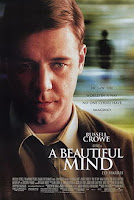


A Beautiful Mind (2001)

Based on the Nobel-prize winning mathematician John Nash, this film tackles the role of schizophrenia in the protagonist's life. It follows the onset of the illness, which commonly manifests in early adulthood, its identification and how it affects Nash personally and professionally. It acknowledges the permanent nature of the condition, showing that he could achieve success while still experiencing symptoms.


The Hurt Locker (2009)

The effects of war are tackled again, this time with the Iraq War. The film, which made Kathryn Bigelow the first female to win Best Director, covers the acute stress experienced in a war zone and how it affects decision making. Instead of having the focus on the posttraumatic symptoms likely experience by the characters after the story's end, the movie gives insight into its development. This is a valuable perspective, considering the current public discussion surrounding PTSD.


The King's Speech (2010)

Not all mental illnesses are defined by mood or disconnect with reality. Stuttering is categorized as a mental health condition and can be comorbid with other disorders. In telling the story of King George VI, The King's Speech shows that not even royalty is immune to these challenges. With the help of a speech therapist, George admirably demonstrates the effort that goes into recovery.


Who do you think will win best picture this year? What awards do you think the cast and crew of Silver Linings Playbook might take home tonight?